

disability
Book Review: Accessible Church by Sandra Peoples
Jeremy Smith reviews Sandra Peoples' new book on the subject of disability in the church, "Accessible Church."
Resource articles are summaries, reviews, and/or reflections on books and other resources related to faith and culture, apologetics, ethics, public theology, and related content per our monthly themes. These are typically short-form and not comprehensive in nature.
This article is a part of our theme, The Way of Christ in Art.
There is something romantic about starting something new: the reflection; celebration; anticipation of a fresh start. Perhaps we are relieved to leave behind a season of tragedy and turmoil, or possibly we are thankful for a year of provision. A fresh start such as the first couple weeks of the new year allows us to look clearly at the previous season and look ahead at the one to come—a unique time of life that many of us take for granted because of the post-holidays-lethargy that may linger around too long.
During the month of January, I have made it a tradition to watch “The Secret Life of Walter Mitty,” a film adapted from a short story by James Thurber—I find it to be a nice refresher when reflecting on New Years resolutions.
Embrace the challenge in front of you, trusting that difficulties of all kinds serve to shape us more into the likeness of Christ. This is the adventure worth embarking on: this is LIFE.
The film’s main character is Walter, a negative assets manager experiencing a humdrum life but accompanied by a rich imagination, desiring something or someone to pull him out of his seemingly inescapable routines. Walter’s place of work happens to be LIFE Magazine—a world-renowned brand known for their top-tier photojournalism—where he develops and archives the negatives from the magazine. Every day, as Walter walks through the doors to his place of work, he is faced with the motto of LIFE Magazine:
To see the world, things dangerous to come to,
to see behind walls, to draw closer,
to find each other and to feel.
That is the purpose of LIFE.
Through a captivating story of adventure, Walter finds himself experiencing the LIFE motto in a way that radically challenges his own life. Not backing down from challenges, remaining in the moment, being present with the person that sits in front of him—the Walter we knew at the beginning of the film has transformed into someone more… alive. His life began to mirror the very motto that he read every day that he walked into work.
As he goes about his day, Walter will on occasion jump into a daydream that portrays himself as a heroic character, only to be whipped back into his monotonous reality. However, when he embarks on his real adventure, he simply says yes to the next challenge that presents itself, turning his former daydreams into real-life experiences. By the end of the story, he realizes that his daydreaming has disappeared altogether because he has opened himself up to a life better than what he could have ever imagined.
Walter was faced with monumental decisions throughout his journey: should he, for example, fly across the world, jump out of a plane, longboard across an island, or hike across snowcapped mountain ranges? But for us normal folk, when do these life-altering moments take place, and how can we navigate them well? For Walter, it was not about accomplishing a goal or becoming a certain kind of person but instead choosing to hold himself accountable to a friend through his actions. And through accountability, he is transformed into the type of person he wished he could become.
In Scripture, we see this lived out throughout Paul’s work as he commends believers to “strain towards what is ahead” and “press on toward the goal,” that being the reward of Christ (Philippians 3:14). But an even greater encouragement lies in Hebrews 11, which describes a litany of faithful servants living out a calling that was ultimately unfulfilled in this life. What might this teach us about our own goals? Each of these individuals pursued what was set before them each day, unshaken by what the end might have been, fulfilling their calling as it was appointed to them, and obeying Jesus’ command to “not worry about tomorrow” (Matthew 6:34).
Maybe we should take some pointers from Walter as we pursue our New Years resolutions. Granted, it is romantic to dream of who we could become after 12 months of hard work, and in the examination of what it would take to get there, we can easily lose hope when trying to make ourselves into the ideal person. What is the worst that could happen if we chose to live open-handed, receptive to whoever and whatever God might bring our way? Therefore, aim to be more like Walter: embrace the challenge in front of you, trusting that difficulties of all kinds serve to shape us more into the likeness of Christ. This is the adventure worth embarking on: this is LIFE.
Sign up for the CFC newsletter now!
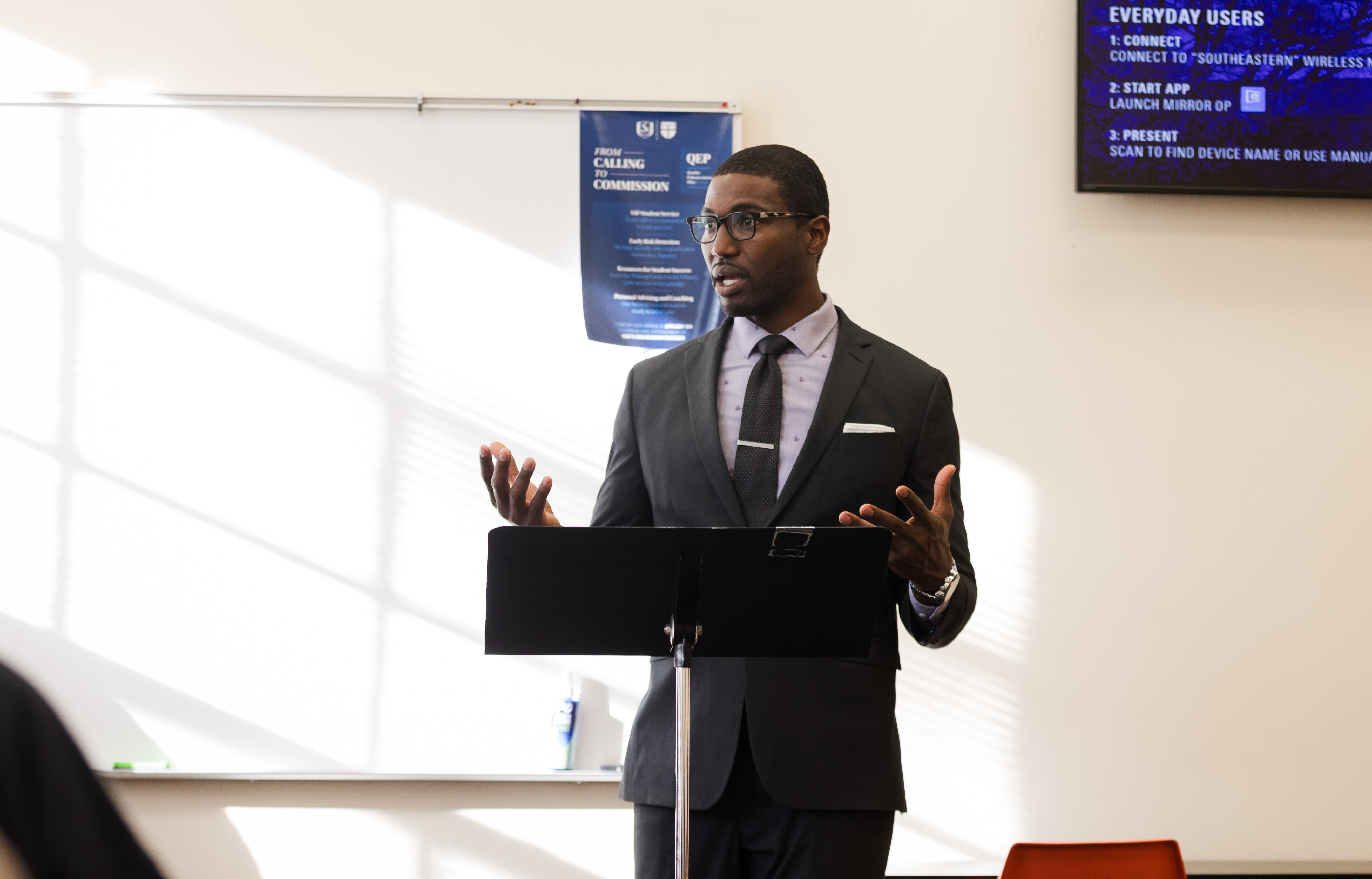
The Christian Ethics track provides specialized academic training that prepares men and women to impact the culture for Christ through prophetic moral witness and service in a variety of settings.
Photo retrieved from Unsplash.

Book Review: Accessible Church by Sandra Peoples
Jeremy Smith reviews Sandra Peoples' new book on the subject of disability in the church, "Accessible Church."
Autism and the Church
Jeremy Smith reflects on his own relationship and engagement with autism and how ministry leaders can better serve autistic persons in their churches.
Do Hard Things: Why all Christians Should Exercise
Jeremy Smith argues for why discipline in exercise is part of stewarding the body well.
ChatGPT and Christian Ethics: Are We Losing Our Creativity?
Jeremy Smith explores the consequences of quelling our creativity
What is Embryo Adoption? Part II: Embryo Adoption & Traditional Adoption
Embryo adoption provides another avenue for Christians to live out a pro-life ethic.
What is Embryo Adoption?
Embryo Adoption is the process of genetic parents donating unused embryos to a couple seeking to bring them through pregnancy to birth. This is typically mediated through adoption agencies, and the process is intended to mirror that of a traditional adoption as embryo adoption is not creating life, but caring well for life that is already created. Ultimately, embryo adoption exists as a response to the injustice of unregulated biomedical technologies.
Sign up for the Christ and Culture newsletter now!

No comments have been added.